
Send Us A Message
How custom mobile fuel stations support changing fleet layouts
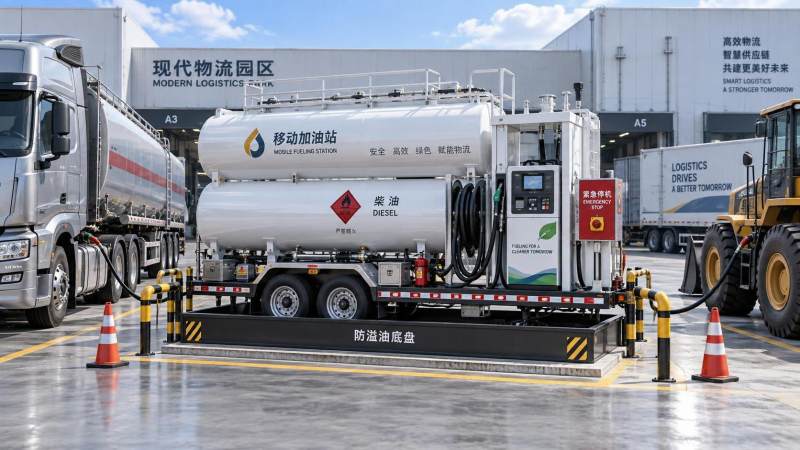
A fleet rarely keeps the same shape for long. A mining operation may open a new work face, a logistics yard may add night-shift vehicles, or a port may move equipment away from a congested berth. In each case, vehicles still need dependable fuel access, but the original refueling point may now be too far away, too small, or located on the wrong traffic route.
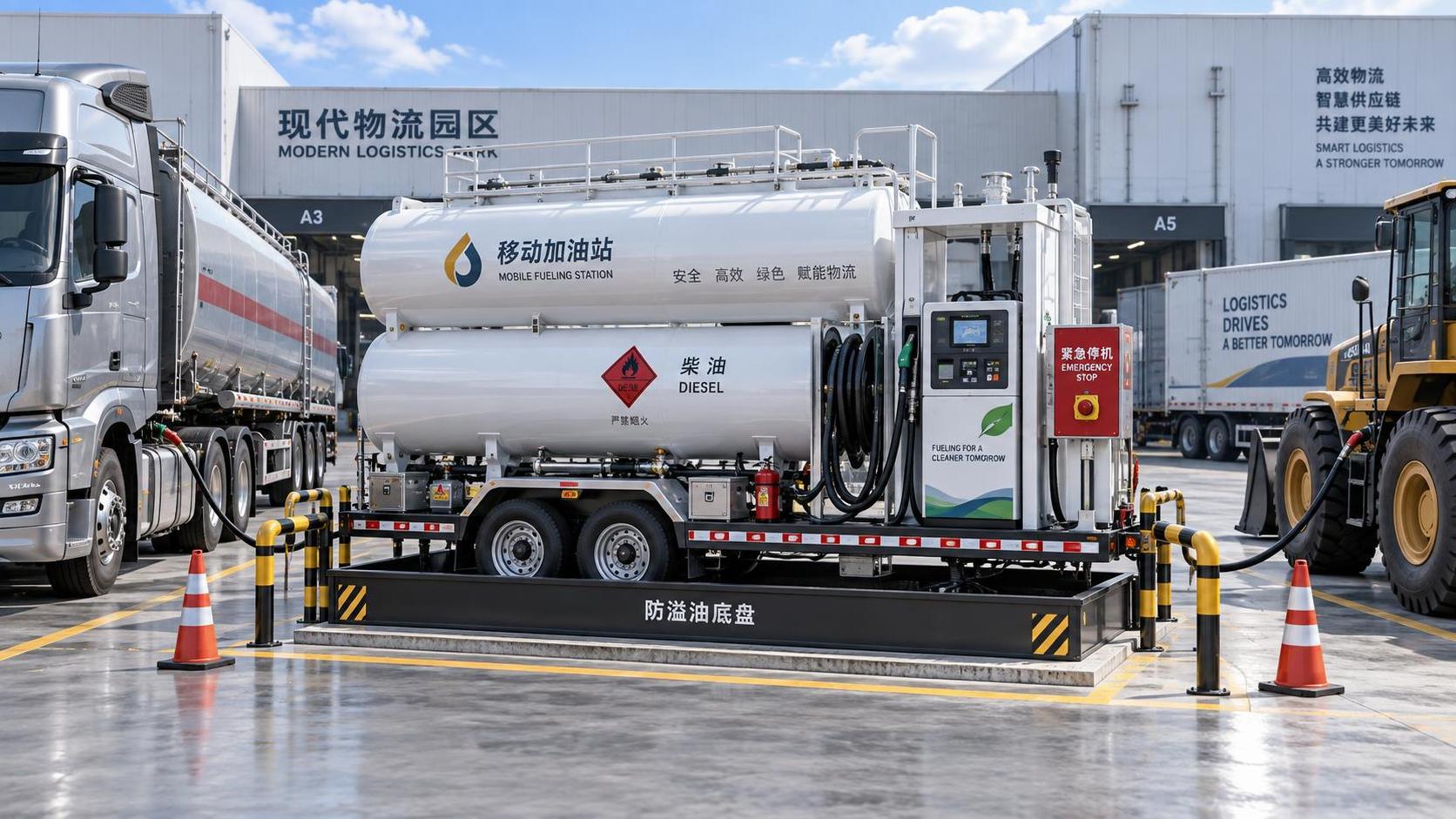
Custom Mobile Fuel Stations support changing fleet layouts by matching fuel storage, dispensing, safety equipment, and mobility to the way vehicles actually move on site. Rather than forcing a revised fleet pattern to work around a fixed fuel island, the operator can position fuel capacity closer to demand, adjust it as operations change, and retain the controls needed for safe fuel handling. The useful decision is not simply whether a station can be moved; it is whether the entire configuration remains suitable after it is moved.
Why a fixed fueling point can become an operational bottleneck
Fueling infrastructure is often planned around the first version of a site layout. Vehicle routes, parking areas, loading zones, workshops, and security gates are mapped at one point in time. Later, the fleet may grow, vehicle types may change, or activity may shift to another part of the site. The stationary fueling point remains where it was, while the demand pattern moves elsewhere.
The immediate effect is usually visible in vehicle movement. Equipment makes extra trips solely to refuel, trucks queue across working lanes, and drivers enter areas that were not designed for frequent fuel traffic. At remote sites, the issue can be more serious: a long round trip to a central tank can consume productive operating time and complicate shift handovers. In ports and construction projects, temporary traffic arrangements may also make the original location difficult to access.
Moving a generic tank closer to vehicles is not a sufficient response. A fuel point must be assessed as a working system: where vehicles approach and leave, how spills are contained, how unauthorized access is controlled, how emergency equipment remains accessible, and whether the unit is appropriate for the local operating environment. A custom mobile arrangement makes these choices part of the equipment design instead of leaving them to improvisation after delivery.
Start with the fleet movement, not the tank size
When managers begin by asking for a storage volume, they can overlook the factors that determine whether the station will improve operations. Capacity matters, but it should follow an assessment of demand and movement. The more practical starting point is to map where fuel is consumed and how vehicles reach the refueling area.
Review the current layout alongside the expected layout over the next operating period. The goal is not to predict every future change precisely. It is to identify the changes that are reasonably likely and avoid buying a unit that only works in one narrow arrangement.
- Fuel demand zones: Identify where trucks, loaders, generators, service vehicles, or other equipment spend most of their time.
- Vehicle flow: Check turning space, one-way routes, reversing requirements, grade changes, and conflicts with loading or pedestrian paths.
- Fueling frequency: Distinguish between a location that needs occasional replenishment and one serving repeated high-throughput refueling during a shift.
- Vehicle compatibility: Note tank inlet height, access side, nozzle reach, expected fuel type, and whether large and small vehicles will use the same station.
- Relocation triggers: Define what operational event would require a move, such as a new work zone, a seasonal yard arrangement, or an expanding equipment park.
- Site constraints: Consider ground bearing conditions, drainage, wind exposure, dust, low temperatures, salt air, and access for fuel delivery vehicles.
This review often reveals that a single central station is still appropriate for bulk replenishment, while a mobile unit is better used as a satellite fueling point. In other cases, a towable station is needed because the fuel point itself must follow changing work areas. The right role depends on the layout problem being solved.
Choose mobility based on the relocation pattern
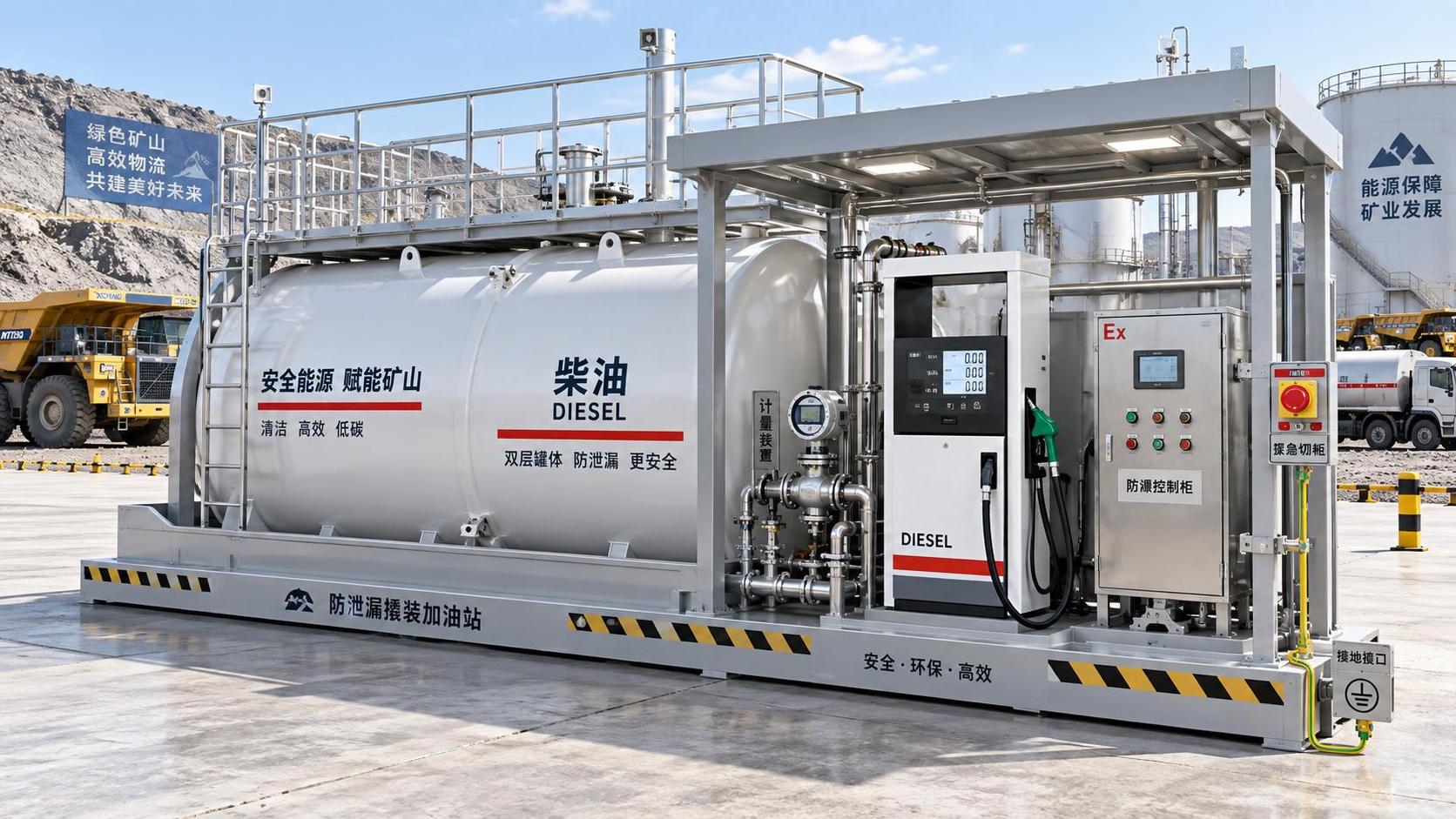
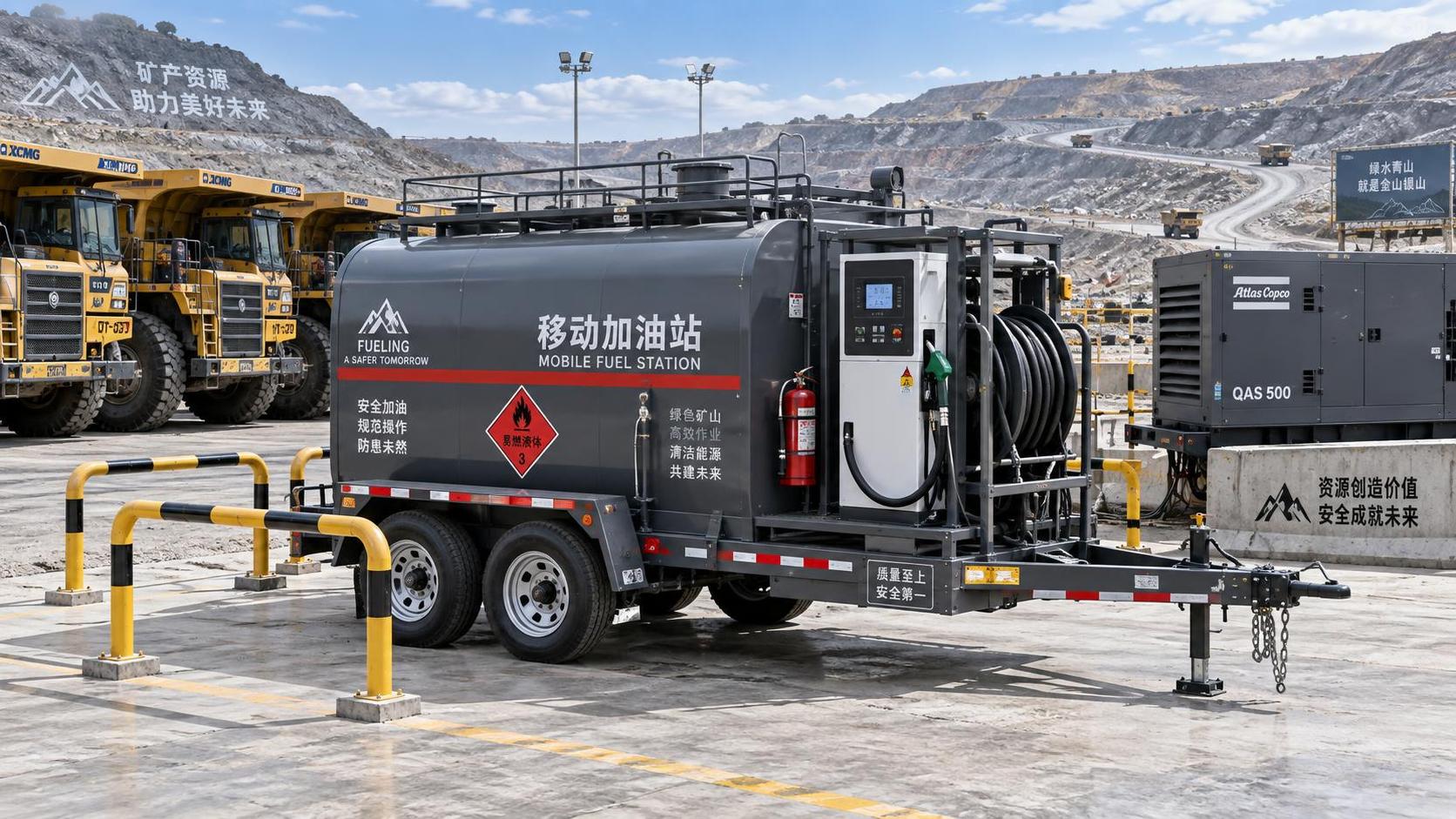
“Mobile” can mean several different things. Some units are designed to be transported between established locations. Others are towable and intended for more frequent repositioning within a controlled site. A skid-mounted refueling unit may be suitable where movement is planned with lifting equipment, while a trailer-based station may suit routes that allow safe towing and placement.
A unit should not be selected solely because it is easier to transport. Frequent movement introduces its own requirements: securing equipment before travel, checking hoses and fittings after placement, confirming level ground, and reviewing whether the new location changes emergency access or separation distances. The mobility method must fit the actual frequency and conditions of relocation.
Custom configuration prevents a move from creating a new problem
When a station changes position, the operating environment can change with it. A unit that performs well in a sheltered logistics yard may face dust, vibration, rain, uneven ground, cold conditions, or restricted access at another location. Customization is valuable when it addresses those differences directly.
Storage and dispensing should be sized separately
Storage volume determines how often the station needs replenishment, while dispensing capacity affects how quickly vehicles can return to work. These are related but not identical decisions. A high-volume tank with an undersized dispensing arrangement may still create queues. Conversely, rapid dispensing with limited storage may shift the bottleneck to fuel delivery scheduling.
Decision-makers should estimate normal demand, peak-shift demand, and the practical interval between replenishment deliveries. The estimate should include foreseeable changes in fleet composition. A site replacing light service vehicles with larger diesel equipment, for example, may need different hose reach, delivery speed, and access geometry even if total monthly fuel consumption remains similar.
Safety features must remain usable in every planned location
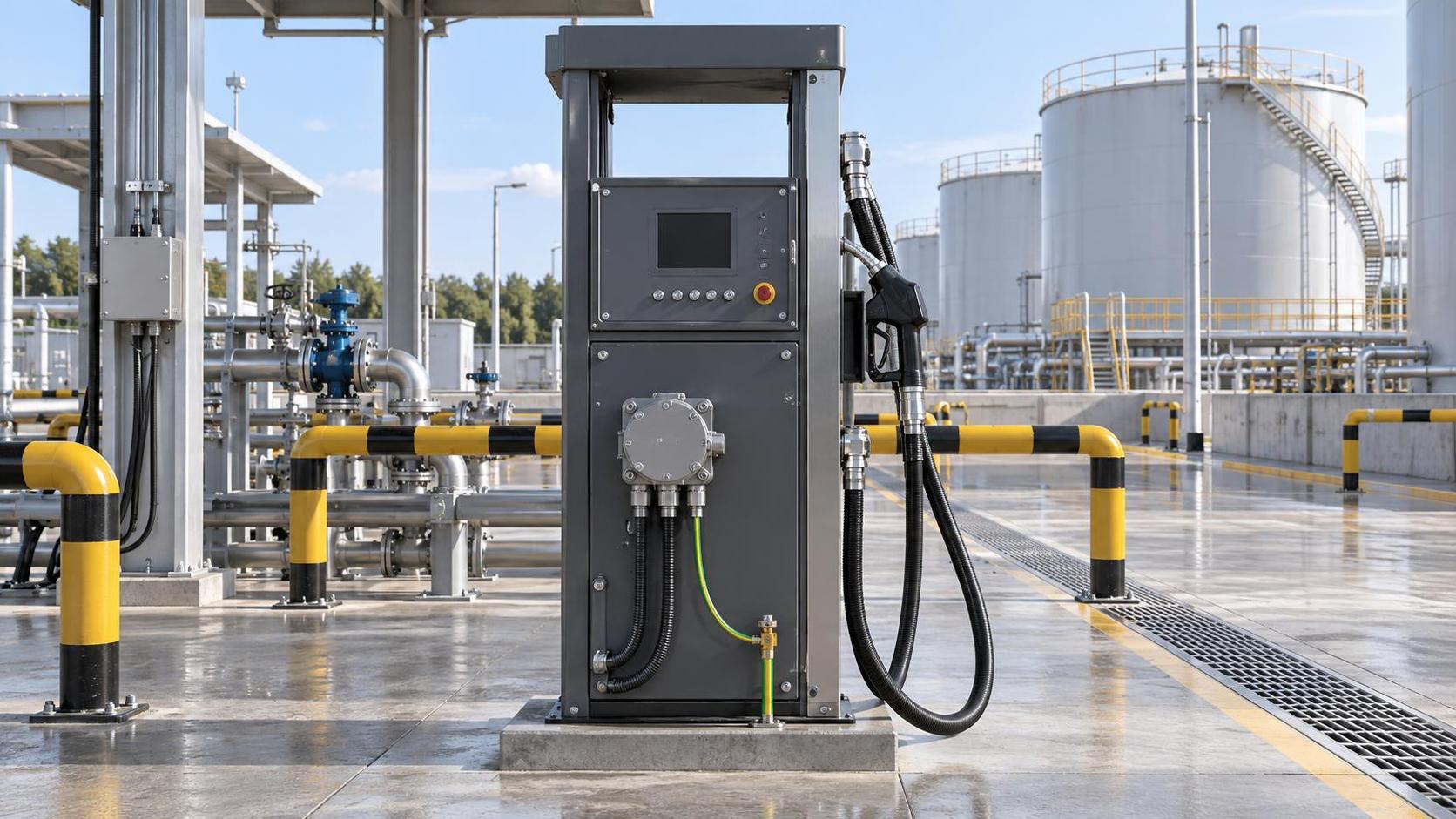
Explosion-proof configurations, emergency shutoff arrangements, grounding provisions, spill containment, ventilation, and fire protection provisions should be considered according to the applicable site rules and local requirements. The question is not simply whether these features are installed. Operators need to verify that personnel can reach and use them after the station is placed in its new position.
For example, an emergency stop should not be blocked by a parked vehicle or positioned on the side facing an active traffic lane. Spill response equipment should remain visible and accessible. Hose routing should not create a trip hazard or force vehicles to cross over lines. Lighting and signage may become more important when a temporary fuel point is used during evening work or in an isolated area.
Protection level and enclosure details should reflect the site
Dusty mines, humid coastal facilities, exposed construction zones, and cold remote bases do not impose the same demands on enclosures, controls, seals, finishes, and electrical components. A configuration can be adjusted to suit the relevant climatic and operating conditions rather than relying on a standard exterior arrangement. Operating language requirements also deserve attention where local crews need clear instructions, labels, and control interfaces.
These details are easy to postpone during procurement because they may not affect the basic dimensions of the station. They become important once the unit is in service. A control panel that is difficult to read, an enclosure not suited to the site environment, or a layout that complicates routine inspection can reduce the practical value of mobility.
Plan the new fueling location as a controlled work area
A mobile station may reduce construction requirements, but it does not remove the need for location planning. Before deployment, the receiving area should be reviewed as carefully as a permanent fuel point, especially when the unit will stay for an extended period.
- Confirm the ground condition. The surface should support the unit, fuel load, and visiting vehicles without excessive settlement or instability. Evaluate drainage so that water does not collect around the station.
- Set the vehicle approach. A simple entry, fueling position, and exit route reduces reversing and prevents queues from extending into active work areas.
- Preserve delivery access. The fuel delivery vehicle needs a safe route and enough working space. A well-positioned station that cannot be replenished efficiently will not solve the supply issue.
- Protect access and visibility. The area should allow authorized users to refuel without making the station vulnerable to collision, interference, or uncontrolled public access.
- Review drainage and spill response. Site drainage paths, nearby sensitive areas, and the location of containment and response materials should be checked before use.
- Document the placement. Record the selected position, operating restrictions, inspection points, and responsible personnel. This is especially useful where the station may be moved between several approved locations.
At sites with changing layouts, pre-approving several potential locations can reduce delay. Each location does not need identical preparation, but the operator should know the limitations of each one. One area may suit large haul trucks but not delivery tankers; another may be appropriate only during dry conditions or only for lower traffic volumes.
Keep fuel supply aligned with the revised layout
Relocating a fuel station changes more than the travel distance for fleet vehicles. It can also alter how fuel deliveries are scheduled, where inventory is checked, and who is responsible for daily inspection. These operational changes should be decided before the move, not after the first low-fuel alarm or missed delivery.
Inventory procedures should account for the time required to arrange replenishment and the expected variability of consumption. A temporary work area may use little fuel most days but experience sharp demand when additional equipment arrives. The replenishment threshold should reflect that pattern. Where a mobile unit supplements a main depot, define whether it is replenished from an external delivery or from the central storage system, and establish controls that prevent unclear transfers or inaccurate stock records.
Daily checks should focus on conditions affected by movement: unit level, wheel or skid condition where relevant, hose condition, connection integrity, dispenser operation, visible signs of damage, access around emergency controls, and the condition of the surrounding surface. Following transport, these checks are particularly important because vibration and handling can affect components that were stable at the previous location.
Common decisions that reduce the value of a mobile station
One frequent mistake is treating a mobile fuel station as temporary equipment that requires less planning than a permanent installation. The opposite is often true. Because the unit can be relocated, operating teams must repeatedly confirm that the new setting remains suitable.
Another issue is choosing the largest possible tank without checking traffic flow. A larger tank may be useful, but it can also create placement restrictions, reduce maneuvering room, or make relocation more complex. The best capacity is the one that supports the replenishment cycle and fleet demand without undermining safe access.
Some sites also assume that a towable unit can be placed wherever a vehicle can reach. Towing access does not prove that the location is appropriate for dispensing. The unit still needs stable positioning, controlled vehicle movement, emergency access, and an operating arrangement consistent with applicable requirements.
Finally, customization should not be reduced to exterior color or labels. Those elements can be useful, but the more consequential choices are the safety configuration, dispensing arrangement, protection level, storage design, mobility method, and interface details that affect everyday use.
When a custom design is the stronger option
A standard mobile unit can be appropriate where fleet size, site conditions, fuel type, and movement patterns are stable. A custom design becomes more valuable when the operation has an identifiable constraint that a standard layout cannot address: different vehicle classes using the same fuel point, limited turning space, remote deployment, harsh environmental exposure, changing language requirements, or a need to move between distinctly different work zones.
For overseas projects, the specification process should also account for local rules, climate, transport conditions, and documentation needs. Equipment suppliers with experience in complete energy equipment exports can support technical configuration, export documentation, freight coordination, and on-site guidance where required. The important point is to establish the operating conditions early enough that transport and compliance considerations do not force a last-minute redesign.
Custom Mobile Fuel Stations work best when treated as part of fleet-layout planning rather than as a standalone tank purchase. The station should follow the productive movement of vehicles, while its storage, dispensing, safety, and service arrangements remain workable at every intended location. That approach turns mobility into a practical operating tool instead of a temporary workaround.
Please give us a message